I've left this blog

Hello, I'm not updating this blog anymore but you can still find me over at Medium or on my website. Cheers for now.

Search This Blog

Showing posts with label agora. Show all posts

Tuesday, 23 October 2012

51. Pop Up Local Democracy

If we can have pop up shops and pop up restaurants then why not pop up local democracy?  Actually I'm guessing this is already happening - I'd love to hear examples.

I've blogged before about the importance of weaving democracy into the urban space.  At a time when there are so many shops, houses and other buildings sitting empty why not take the opportunity to bring local politics closer to the public. 

In particular it's worth thinking about the techniques of pop up retail.  Setting something up and blitzing the immediate area with publicity, people with leaflets and sandwich boards; using traditional and social media to generate interest.

These 'events' would be temporary - quick hits. 

The kinds of things I've got in mind are:

Pop Up Scrutiny:  Take over an empty shop in the city centre for a few weeks to open public access to a scrutiny review.  As well as consultation materials why not locate scrutiny officers there so they are on hand to answer questions and record ideas.

Pop Up Consultation:  For planning or anything else.  The empty shop / house can be recreated imaginatively as an exhibition space using displays, models or whatever.  

Pop Up Councillor Surgeries:  Rather than the traditional community centre or town hall locations, groups of councillors could take over somewhere unexpected for a day to deal with casework or any other queries.  The very fact of 'popping up' somewhere unexpected might just generate some additional public interest.

One advantage would be the ability to match the location with the topic; to go to where the public are.  So, for example; a shop in the city centre for city wide issues; an empty house in a residential area for community issues.


Update:  A couple of nice tweets in response to this -thanks guys!

Photo credit: http://commons.wikimedia.org/wiki/File:Marmite_pop-up_shop_in_2009.jpg

Friday, 23 September 2011

23. Ostracic Voting

OK, the phrase ‘ostracic voting’ sounds strange.  This may partly be because I have probably just made it up.  Yes, it is connected to the idea of ostracism which, like many of my favourite democratic ideas, goes back to classical Athens.  I wondered whether it might be something that could be applied to the practice of modern local democracy.

Agora Museum in Athens
I got the idea after a visit to the rather beautiful Athens Agora Museum, where, as well as coming face to face with a real life kleroterian as they used for sortitions, I came across some ostraca (ostracons?).  Now these wonderful little broken pieces of clay or shell where used for the process of ostracising (expelling) unwanted politicians.
Ostracism in Classical Athens

The Wikipedia page about ostracism, which is well worth read, explains it like this:
Each year the Athenians were asked in the assembly whether they wished to hold an ostracism...  If they voted "yes", then an ostracism would be held two months later. In a section of the agora set off and suitably barriered, citizens scratched the name of a citizen they wished to expel on pottery shards, and deposited them in urns. The presiding officials counted the ostraka submitted and sorted the names into separate piles. The person whose pile contained the most ostraka would be banished...
Banishment would be for 10 years although, as property rights were essentially unaffected this constituted a political suspension rather than any more significant – you could get the death penalty for political crimes back then.  Once the term was up the victim could resume their place in the political order as before – in special circumstances people could even be brought back early.

The benefit of ostracism for the Athenians was that it provided a countermeasure against tyranny and could also help decide issues of policy where particular positions were strongly associated with individuals.  With the rise of organised factions, however, its use declined.

Ostraca in the Agora Museum in Athens
Ostracic Voting in Local Democracy Today
Thinking about this I wonder if there are at least four ways ostracic voting might be used in local democracy:

1.         Committee Meetings
Committees could be given the option to decide whether to have an vote and the ability to expel a member of the committee for any period of time. This might improve the performance of the committee and keep individual members on their toes.  It would not affect political balance as a replacement would come from the same party. However, party motives may come to the fore and with a small group, the secret nature of the voting might not be sufficient protection against these motives dominating.  On the other hand, where the committee members are genuinely concerned about the effectiveness of the group it gives them the ability to remove unproductive, disruptive or uninterested individuals.

2.         Council Meetings
Council meetings could be given not so much the power to recall, as the power to eject.  Council as a body would have the option to remove any unproductive, disruptive or uninterested individuals and force a by election in their wards.  Again, this procedure could be subject to group politics but, with a secret vote, that would be more difficult to arrange.

3.         Recall Elections
The procedure of recall elections gives voters the chance to remove unwanted representatives. Ostracic voting provides a different way to organise this. Every year voters would have the chance to nominate a councillor they would like to see ostracised (this could be done on a ward or council wide basis), the councillor with the most votes, perhaps with a minimum threshold would be ostracised, and a by election held.

4.         Local Elections
Finally, ostracic voting might be applied to the local election procedure itself. Voters could rank candidates, not in their order of preference, but in their order of disapproval. Selection could take place on the simple basis of the candidate least disliked being elected or after a series or rounds similar to the alternative vote or single transferable vote.  

All of this might sounds weird but perhaps it is not as weird as all that as this method is already popular.  Just look at any number of reality TV shows such as Big Brother to see ostracic voting in action.

Thursday, 8 July 2010

13. Agoric Democracy

If you think that the Internet is the way to revive democracy then look away now.  You probably won't like this one.

The idea of Agoric Democracy is inspired by the Agora of the ancient Greek polis (the Roman equivalent was the Forum) .  Now I'm no expert on ancient Greek cities and I'm basing this on what is probably an ideal version of a much messier reality but, as far as I know, you can say the following about the Agora:


  • Agora literally means 'gatheing place' (agoraphobic comes from this and actually means fear of public places not open spaces)
  • It was at the centre of many ancient Greek cities including Athens during the height of its democracy
  • It was the city's central square which often had public buildings around the outside and hosted markets as well as political activity
  • It was the place to come and deliberate, shop, see entertainment, argue or just be seen
  • It was the place where trials could take place, political speeches made and new laws declared
  • People who didn't go to the agorae were idiots - this is where the word comes from
From this I'm drawing three important principles of agoric democracy:

  • Politics is not a separate activity.  Politics, law and commerce all take place in one physical space, sometimes at the same time. (Compare this with many cities in the UK today where council chambers are housed in building away from city centres and where shopping centres are devoid of (more or less) all political activity).  At a personal level people don't have separate identities as citizens or as consumers so why should these things be catered for separately by society? 
  • Political activity is open and in public.  Law making assemblies meet in full view of people going about their normal everyday business.  You don't have to make a special effort to see politics in action - it will just be there in front of you.  'Speak to my councillor' would be on the shopping list just below 'batteries' and just above 'socks'.
  • Interaction and deliberation are face to faceNon verbal communication is very important for human communication and so communication concerned with democracy and decision making should not be conducted without it.  Citizenship needs face to face deliberation.
This last point is one that can be argued but there is no doubt that online and offline deliberation are different and, according to this article by Min:
... many theorists are skeptical of the power of online deliberation. With the exception of Walther's (1992) social information processing theory, most other communication theories suggest that online discussion will be less effective than face-to-face discussion. Traditional social presence theory (Short, Williams, & Christie, 1976) asserts that communication is most effective when nonverbal cues are present.

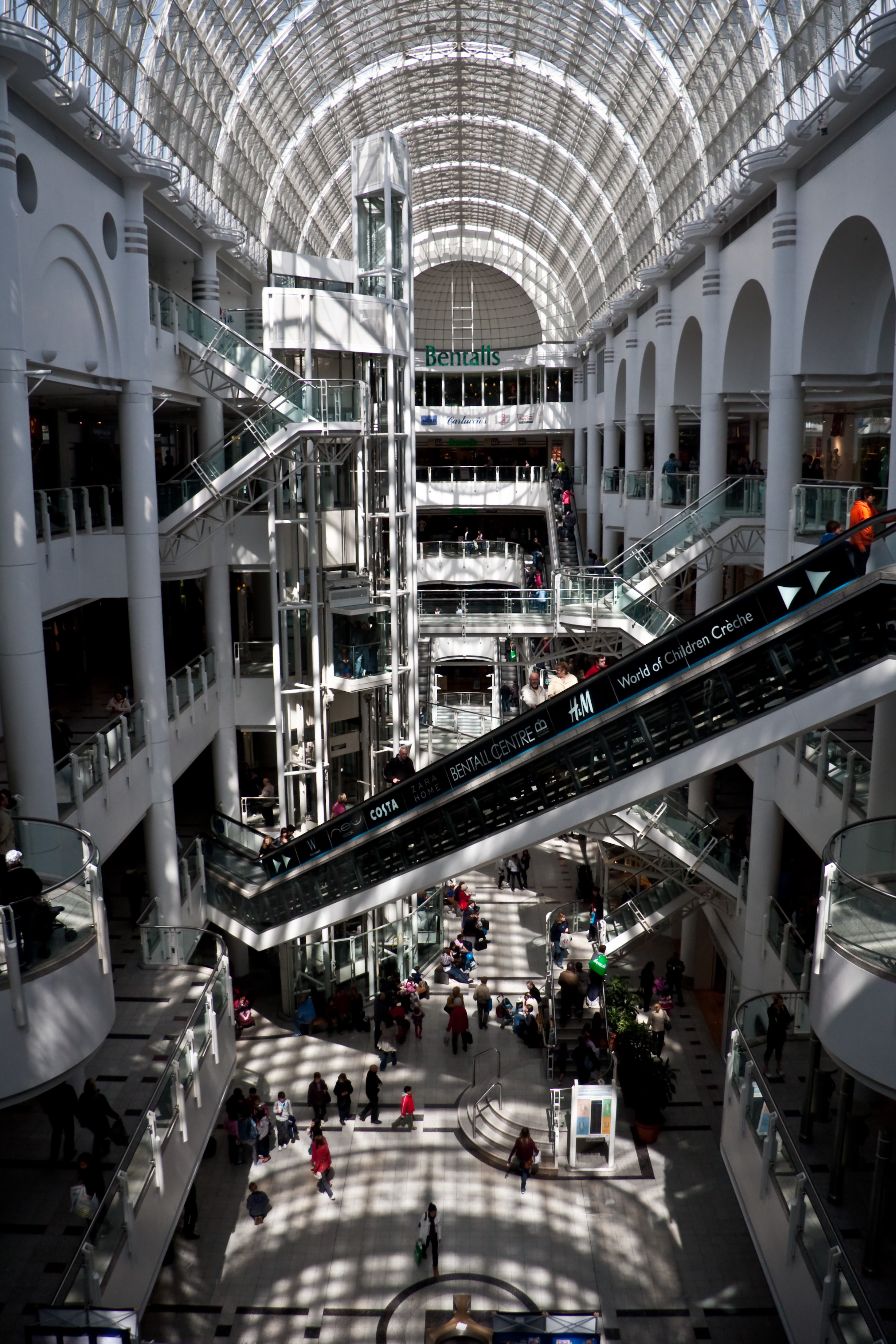
From the this perspective, the challenge of democracy is one that needs to be taken up by urban planning and political geography.   It means taking a new look at city centres and shopping centres and weaving in spaces for council committees to meet, for councillors to have their surgeries and for council officials to have their offices.  These political spaces should either be completely open or, at worst, behind glass.  It means providing places where people can stand on soap boxes and make their arguments, set up stalls to support their campaigns or just meet with other folk to debate the issues of the day.  Of course all this takes place in the middle of shopping, eating and entertainment in the thriving centre of the urban space. 

Hence reviving democracy is a challenge of design and planning.  Not so much designing out crime as designing in democracy. Ensuring local politics takes place in a constant stream of human contact and interaction.

One footnote to this is that this new (old) vision of the city might actually help with a problem caused by the Internet - namely the pressure placed on city centre retail by online shopping.

I have also noticed that the Welsh word agored means 'open', I'm not sure whether that is connected, but I'd like to think it is.