I've left this blog

Hello, I'm not updating this blog anymore but you can still find me over at Medium or on my website. Cheers for now.

Search This Blog

Showing posts with label elections. Show all posts

Tuesday, 19 June 2012

44. Local Digital Democracy: A Five Point Checklist

Back in February 2011 I wrote a joint post with the legendary Carl Whistlecraft setting out some thinking on local digital democracy and what it might look like.  You can find the original post on Carl's blog here.

In the post we defined local digital democracy as:
  • Using social media to make a bridge between the formal world of local politics and the real world of real people
  • Being clear that local government is not just about services – it has a distinct and important democratic role with elected local councillors at its heart
  • Recognising that the world is changing.  Social media is changing the way the world works – local democracy needs to catch up
  • Recognising that local democracy needs stronger citizen engagement
  • Building from the traditional ways of doing things and using online tools to make them work better and reach more people
We could also see numerous benefits including for decision making and for reputation, for councillors, officers and citizens.  

In the post we identified the five essential features of local digital democracy.  Here I have just tweaked them into a into a checklist of five questions.  I think they provide a nifty little framework for assessing whether any given council 'has' local digital democracy.  How does yours score?

Local Digital Democracy:  A Five Point Checklist for Local Government


1.  Are Councillors Online?   
  • How many councillors are blogging, tweeting, facebooking etc?
  • Is training and support provided for those using social media?
  • Are awareness sessions provided for those who haven't yet put their toes in the water?
See CllrSocmed for much more info on this.

2.  Is the Council's Online Decision Making Social? 
  • Can online agendas, minutes and reports be easily shared via social media?
  • Are items broken down into bite sized chunks rather than published in unwieldy PDFs?
  • Is it possible for people to comment on decision making items via social media?
See my previous post on social council decision making here
 
3.  Are Council Meetings Social?
  • Do meetings have webcasts that allow engagement via social media?
  • Can councillors and citizens tweet at Council meetings?
  • Does an officer provide a formal live commentary on meetings via social media?
See the Kirklees experience for a great example.
Dave Briggs has also been looking at the issue of tweeting at council meetings.

4.  Are Local Elections Social?
  • Do election teams make use of social media to promote the election process?
  • Do candidates share their election materials online or parties provide online manifestos?
  • Are results shared via social media?
Again, more wonderful stuff from Kirklees.

5.  Is There a Local Digital Democracy Community?
  • Is the Council proactively supporting local digital democracy?
  • Are initiatives such as Local Democracy Week being used to support digital engagement?
  • Are there online communities supporting local digital democracy and looking at how it might be improved?
I've posted before on Council's producing democracy plans - what's needed is a digital version.

So, what does your Council score out of five?  I'd be amazed if any actually scored five but, who knows, maybe one day...

Photo credit: http://www.flickr.com/photos/usnationalarchives/3660047829/

Thursday, 13 October 2011

25. Everyone Can Vote

This is guest post from Dr Toby James from the Department of Political and Cultural Studies, Swansea University:


Idea 18 suggested that making voting compulsory couldimprove local democracy.  Turnout is low in local elections in most democracies, commonly flat lining in the 30-40% range.  Fining people who don’t vote would be one fix.
 
One reason that people may not vote, however, is that they lack the time.  We have many competing demands on us.  Sometimes we don't have a babysitter, we work long shifts, need to get to a friend's party etc.  Citizens can easily be distracted from participating in our democratic institutions.  It is not that they necessarily do not wish to be involved in local democracy or do not want their views to be heard. 

In some countries voting and registering to vote can be very bureaucratic and time consuming. Citizens often have to visit a polling station to cast their vote, which may involve considerable travel.  They may be required to present special forms of photographic identification to vote.  Sometimes citizens may find that they need to register to vote a long time in advance of an election and provide intricate personal information such as social security numbers to be included. 

The more intricate and bureaucratic the requirements imposed on voters, the more likely that some will slip up and not make it onto the register.  In the UK, citizens wanting to cast their vote by the post have had to provide a date of birth and signature on their application form for a postal vote and their eventual ballot paper.  The two are then compared.  But some votes are often deemed invalid because citizens make administrative errors like providing the current day as their day of birth. Asking citizens to provide a social security number is even more burdensome.  Do you know yours off the top of your head?  One election administrator recently gave me the example of a citizen who wanted to vote, but who she could not add to the electoral roll: 

‘We had one woman every year would give you her national insurance number. Every year you’d write to her and say “That’s not your national insurance number.” It turned out it was her gas mask number from the war but she was convinced that was her national insurance number and there’s no way you could get any other number out of her.’

The procedures for voting and registering to vote are not always so out of tune with modern lifestyles.  In some elections voting and registering to vote is very convenient.  Some states in the US allow citizens to turn up and register on the day of election.  In Estonia and Norway citizens could cast their vote over the internet.  The UK has experimented with all postal elections and these provided an enormous boost to voter turnout.  In the US you can register to vote when you apply for your driving license.  Making the polling station closer to the voter increases the chances that they will vote.  Extending election day over two days, or even a week, helps too.

We are increasingly a Facebook/Twitter/XFactor generation.  We are used to everything being a click away.  Why should we have to travel to the village hall to let government know our views?

For an overview of the research on how election administration can increase turnout, and a broad brush tool for practitioners to identify some reforms, see my article in Representation (which is free to download).

Friday, 23 September 2011

23. Ostracic Voting

OK, the phrase ‘ostracic voting’ sounds strange.  This may partly be because I have probably just made it up.  Yes, it is connected to the idea of ostracism which, like many of my favourite democratic ideas, goes back to classical Athens.  I wondered whether it might be something that could be applied to the practice of modern local democracy.

Agora Museum in Athens
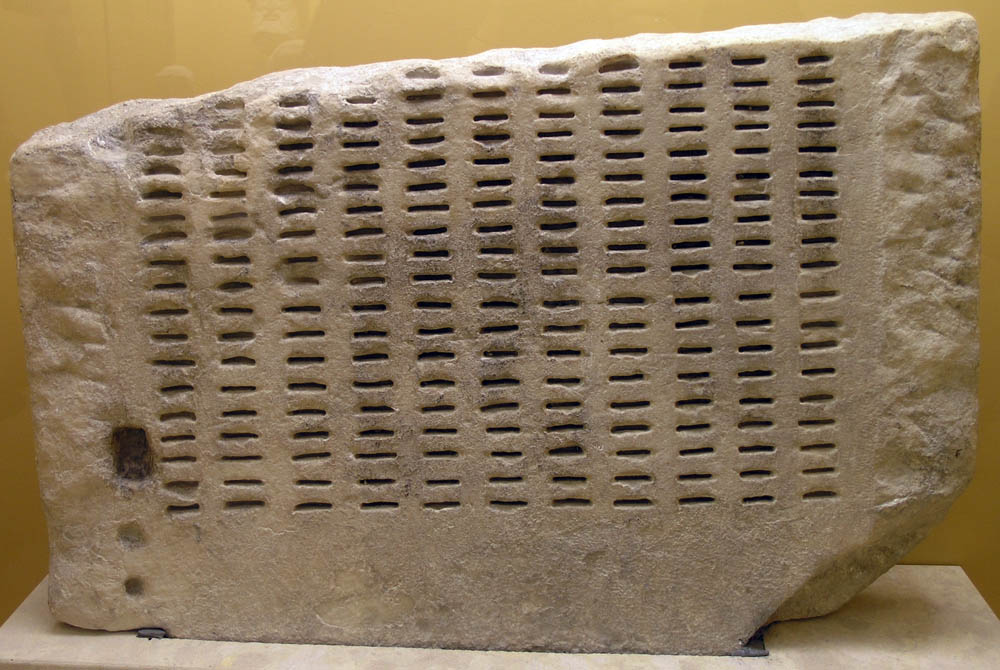
I got the idea after a visit to the rather beautiful Athens Agora Museum, where, as well as coming face to face with a real life kleroterian as they used for sortitions, I came across some ostraca (ostracons?).  Now these wonderful little broken pieces of clay or shell where used for the process of ostracising (expelling) unwanted politicians.
Ostracism in Classical Athens

The Wikipedia page about ostracism, which is well worth read, explains it like this:
Each year the Athenians were asked in the assembly whether they wished to hold an ostracism...  If they voted "yes", then an ostracism would be held two months later. In a section of the agora set off and suitably barriered, citizens scratched the name of a citizen they wished to expel on pottery shards, and deposited them in urns. The presiding officials counted the ostraka submitted and sorted the names into separate piles. The person whose pile contained the most ostraka would be banished...
Banishment would be for 10 years although, as property rights were essentially unaffected this constituted a political suspension rather than any more significant – you could get the death penalty for political crimes back then.  Once the term was up the victim could resume their place in the political order as before – in special circumstances people could even be brought back early.

The benefit of ostracism for the Athenians was that it provided a countermeasure against tyranny and could also help decide issues of policy where particular positions were strongly associated with individuals.  With the rise of organised factions, however, its use declined.

Ostraca in the Agora Museum in Athens
Ostracic Voting in Local Democracy Today
Thinking about this I wonder if there are at least four ways ostracic voting might be used in local democracy:

1.         Committee Meetings
Committees could be given the option to decide whether to have an vote and the ability to expel a member of the committee for any period of time. This might improve the performance of the committee and keep individual members on their toes.  It would not affect political balance as a replacement would come from the same party. However, party motives may come to the fore and with a small group, the secret nature of the voting might not be sufficient protection against these motives dominating.  On the other hand, where the committee members are genuinely concerned about the effectiveness of the group it gives them the ability to remove unproductive, disruptive or uninterested individuals.

2.         Council Meetings
Council meetings could be given not so much the power to recall, as the power to eject.  Council as a body would have the option to remove any unproductive, disruptive or uninterested individuals and force a by election in their wards.  Again, this procedure could be subject to group politics but, with a secret vote, that would be more difficult to arrange.

3.         Recall Elections
The procedure of recall elections gives voters the chance to remove unwanted representatives. Ostracic voting provides a different way to organise this. Every year voters would have the chance to nominate a councillor they would like to see ostracised (this could be done on a ward or council wide basis), the councillor with the most votes, perhaps with a minimum threshold would be ostracised, and a by election held.

4.         Local Elections
Finally, ostracic voting might be applied to the local election procedure itself. Voters could rank candidates, not in their order of preference, but in their order of disapproval. Selection could take place on the simple basis of the candidate least disliked being elected or after a series or rounds similar to the alternative vote or single transferable vote.  

All of this might sounds weird but perhaps it is not as weird as all that as this method is already popular.  Just look at any number of reality TV shows such as Big Brother to see ostracic voting in action.

Sunday, 23 January 2011

19. Local Sortitions

As I have mentioned in a previous post, elections, whilst regarded as the very definition of democracy by many, can simply be regarded as a means to an end.  The end being to select a group of people to make decisions and agree policies relevant to local government.

One alternative mechanism, that I'm quite keen on as it happens, is sortition.  This is the process of selecting representatives by lot.  (Another word for this is allotment but if I titled this post local allotments it might have given the wrong impression...).

There are a number of arguments for and against sortition as you would expect.  It ensures that the selection of representatives is free from corruption and the manipulation of vested interests through the mass media.  If designed in the right way it can also ensure that representatives as a group reflect the general population.  It also addresses the problems of legitimacy that derive from low election turn outs.

Most significantly of all it would radically alter the way that national political parties are involved in local politics.  If you you don't like that involvement then this idea is for you.

Of course there are downsides.  You can argue about the quality and motivation of those selected by this method but elections suffer from similar problems.  More of a concern is that you lose the engagement in politics for the general population that elections bring - this would need to be addressed by other forms engagement - I don't think its an insurmountable problem.  I suppose one other worry is that unelected officials may get overly powerful  so measures would be needed to address this.

If you still think its a bit far fetched then remember that we already have this system for decision making on legal issues.  Lay people are drawn at random to sit on juries.  We consider it a fundamental aspect of our democracy. 

The reason I decided to post this now is because I came across this great site dedicated entirely to sortition.  It's called Equality by Lot - the blog of the Kleroterians.

If you want to know more this is obviously the place to go - they know a *lot* more than I do.

By the way, a kleroterian was the machine used by the ancient Greeks to conduct their sortitions.  Which again goes to show that so many great ideas for local democracy can be found in the history books.

(More about Athens and sortition here - link courtesy of @participatory)


Kleroterion

Tuesday, 4 January 2011

18. Everyone Must Vote

I recently came across an interesting paper by Heather Lardy entitled 'Is there a Right not to Vote?' in the Oxford Journal of Legal Studies.  It deals forensically with arguments against compulsory voting in a general sense but got me thinking about what local democracy might be like in the UK if voting in local elections was made compulsory.

Of course turnout is a big problem for local democracy in the UK.  At around 40% (when there is not a general election at the same time) it is significantly lower than national elections and also lower than in other European countries.  It doesn't help the legitimacy of local government when less than half of those eligible to vote chose to do so.

But what is the alternative?

Well,  voting could be compulsory for all local citizens, fines or even short prison sentences could follow for failure to comply.  It's an idea as ancient as the Greeks and such schemes operate today in countries such as Australia.  Is it really so difficult to embrace?  Citizens have a duty to pay tax, to serve on juries, so why not vote?

There are many ways in which concerns could be dealt with.  So, for example, you could add an 'abstain' option to the ballot, give people the option to vote 'none of the above' or even provide a blank space for people to add in their own preference. 

One idea I like is to pay people to vote.  A surcharge could be placed on the Council Tax to fund a £10 'reward' for every voter.  It would (more or less) act like a deposit scheme for Council Tax payers and redistribute a little wealth for those who are not.

One important benefit of compulsory voting is that it would improve the functioning of local politics.  Parties would need to revisit their electoral strategies and ensure that their policies appealed to all voters - not just those might be expected to vote voluntarily.  Hence politics should be more inclusive and promote a fairer society.


update: another article here but I haven't read it yet...

Friday, 16 July 2010

14. Volunteer Democracy

This version of local democracy comes from an idea I mentioned in passing in the localopolis pamphlet - that anyone who wants to should be able to become a councillor.

I was reminded of it by some recent comments by Grant Schapps MP, Minister of State for Housing & Local Government, that the professionalisation of councillors was a worrying trend and that they should be volunteers.

My argument would go like this:

  • Local political representatives are there to do a job - it doesn't matter how they are selected it is what they do that matters
  • We get very tied up with the idea that representatives have to be elected and this is what makes them legitimate but why?  In ancient Athens they drew lots and we are quite comfortable with that method for selecting juries.  So the method is just a means to an end not an end in itself.
  • One of the reasons we use elections and lots is to select the few from the many but this hardly seems to be a problem as far as local councillors are concerned.  Local political parties often struggle to get people onto ballot papers and many seats are uncontested.
  • Clay Shirky has recently been talking about a cognitive surplus that social media might be able to harness - in a similar vein what about  focusing on civic surplus and how local government might harness that?  People who are unemployed, retired or just have a little spare time might all want to give being a councillor a go.
  • Giving everyone a go at being a local councillor would be an excellent way to raise awareness and understanding of local democracy throughout the community
So why not offer the opportunity of being a councillor to all citizens and, instead of thinking about how we fix the electoral process concentrate on redesigning institutions to accommodate everyone who wants to volunteer?

Here are some thoughts about how it might work in practice:

  • Every four years, instead of local elections we have local invitations - letters to all eligible citizens inviting them to volunteer to serve as a councillor
  • Volunteers would them be allocated jobs, for example, sitting in council meetings to vote on council decisions, working on scrutiny committees and policy juries, dealing with service problems and complaints - there might be an interesting hook up with the Citizen's Advice Bureau here - after all councillors in 'surgery mode' fulfil a similar advice role.  I'm sure that there are many other roles.
  • Representativeness and equality could be addressed from within the pool of volunteers so that their is a reasonable mix of volunteers for each task - this would also promote social cohesion as people from different parts of the community get to interact
  • If needed there could still be a formal election for a mayor or similar to facilitate the whole process
  • If there are too many volunteers then lots might still be used, or better still, give people one or two year terms of office - even better would be to keep redesigning local government so that everyone can be put to work for the civic good
I think this would also be a neat way to solve the thorny problems associated with combining representative and participative democracy - in fact it's possibly the neatest.

Monday, 21 June 2010

11. Facebook Style Democracy

This idea may be the first of many drawn from the world of social media.

Whilst some see social media as an enhancement for local government and democracy for example, others may see it as a more effective alternative, especially for organisations.  It is not difficult to see why given both the level and extent of participation in sites such as facebook compared with involvement in local democracy.  No doubt the rise of social media presents a challenge for democracy at many levels.  The important point for me, however, is that people are crystal clear about what democracy is, and what social media is, and not to blur the distinction between the two.
Another way of looking at things is to see social media platforms such as facebook as useful metaphors for how local democracy might work.  In other words taking the successful structures and patterns of participation of something like facebook and applying them to democratic practice.  Behind this is the belief that social media platforms have much more successfully tapped into natural modes of human interaction and political behaviour than local governments, and therefore hold useful lessons for democratic practice which was perhaps better suited to very different times.

Facebook Style Democracy is my own 'thought experiment'. I'm taking what I believe to be the successful attributes of facebook (feedback, affiliation, networks) and thinking how they might appear in local democratic form.  I'm also trying to imagine it offline as well as online (although online is the most likely form offline forms may be required for inclusion and choice)

Facebook Style Democracy, then, would have the following features.

  • Bespoke individual accounts where people can set their own democratic preferences to receive information and interact with only those issues they chose to (customer management systems in many local councils can already suggest services and benefits to customers based on known intelligence - a democratic version of this would ask for opinions on policies etc in the same way)
  • Preferences and allegiances visible and open (Citizens could display theirs on front doors as well as on their online profiles)
  • Policy development conducted on fan pages with polls, comments and discussions providing opportunities for citizen interaction (this could be a physical location - a policy shop in the town centre, for example)
  • Citizens establish their own policies by setting up fan pages (policy shops) and campaigning for support
  • Decisions made through 'like button' referenda.  In other words local laws would be passed if a given percentage of the population approved (this could also be done physically through more traditional means)
Government in Facebook Style Democracy is made up of a number of different officials:

  • Facilitators: Setting up pages, running referenda, sharing issues, spotting opportunities for bringing different campaigns together, closing pages etc. 
  • Moderators: Ensuring rules are complied with e.g. offensive language, abuse, privacy etc.
  • Capacity Builders: Providing education, training, support for individuals etc.
  • Implementers:  Running services and enforcing local policies
Officials would be elected - again through the use of like buttons.  People would put themselves forward for posts and those most 'liked' would be elected.  Elections would be a continuous process as citizens would have the right to 'unlike' whenever they felt the need.  Hence officials would be assessed by citizens in real time - there would be no need for election campaigns and no real role for political parties either.

Note that elected officials are not representatives - this form of democracy is purely participative - officials have a technical not a democratic function.

The structure and form of Facebook Style Democracy would be dynamic not static.  Citizens could change the way their democracy works.  (Facebook themselves are tentative steps in this direction - see this discussion for example.)

Facebook Style Democracy seems highly suited to our 'postmodern' world.  Perhaps an ideal way to support people swarms and a truly sovereign citizenry.


Update:  Here is another post in a simlar vein flagged up by Carl Haggerty.

Sunday, 9 May 2010

5. Real Representation

This idea is a summary of some of the ideas set out by Gerry Stoker in his book Why Politics Matters given from a local government perspective. 

In this book Stoker argues for a viable and realistic 'politics for amateurs' that can give people genuine opportunities to get engaged whilst taking account of the realities of the modern world.

For Stoker representation needs to be more than the minimum - that people should just vote to select their representatives and then do nothing more.  Instead 'it requires a sustained connection between the representative and those who are represented'. People expect their representatives to reflect their own wants and interests and, whilst they don't want direct democracy, they want to be communicated with and dealt in a better way than happens now.  As Stoker argues:

If representation is made effective then people can focus on passively and sporadically monitoring rather than engaging with intensity at all times; in short it is the ideal mechanism for delivering what the amateur political citizen wants
Stoker suggests some mainstream areas for reform to strengthen representation:

  • Social Representativeness - People will feel better represented if local councils reflect the social diversity in any area.  Encouragement could be offered to women and to ethnic groups and institutions could be made more friendly to those underrepresented
  • Maintaining Ethical Standards - Strong leadership and transparency can be combined with independent oversight to create the right environment for high standards and this will build public trust and confidence
  • Competitive Elections - Some form  of electoral reform, such as proportional representation, might help ensure that everyone feels that their vote has counted and therefore strengthen the relationship with those who represent them

Stoker also suggests three 'unconventional' reforms:

  • Conversational Democracy Through ICT - This may well be more of a challenge for the councillor than for much of the public - however it provides an ideal mechanism for citizens to dip in and out of politics when they need to.  (Stoker's book was published in pre twitter 2006 - this might now be more of a 'mainstream idea')
  • Re-engineering Representative Politics - This is about councillors examining how they spend their time and thinking about whether their time could be used more effectively to connect with citizens.
  • A Representativeness Challenge to Campaign and Civic Groups - To demonstrate that they really do reach out to those that they seek to represent

Many local councils are already using councillor role descriptions and some also expect their councillors to produce annual reports.  You could argue that these are steps that are being taken towards real representation at the local level.  At least it show that the problem is being given some attention.

Wednesday, 14 April 2010

4. A Sovereign and Powerful Citizenry

In the localopolis pamphlet (pdf), Colin Copus argues that the authority of local government should come from the citizenry and not from central government.  As Colin points out, unlike many other countries where local government is established as a part of a national constitution, in the UK local government is a 'creature of statute' which has only as much responsibility as central government chooses to give it.  Instead, Colin argues, local government should draw its political authority upwards from the people.

This type of argument is not new of course.  Colin quotes Thomas Paine who said:

“A constitution is not the act of a government, but of a people constituting a government; and government without a constitution, is power without right”

Whilst Tom Paine was a 18th Century republican arguing against the divine right of monarchs rather than the authority of central government the comparison is still an interesting one.  Why can't we apply the principles of Tom Paine to UK local government?

In this version of local democracy local citizens have the ability to determine the size and shape of their local political institution and to set up new ones if they are unhappy with the existing arrangements. 

Crucially, local government is politically independent and this implies the need for a national constitution to protect this independence.

In practical terms this version of citizen controlled local government requires a mix of representative and direct democracy to make it work.  This starts with the referendum which establishes its constitution and it continues with further referenda as required.  In fact referenda would be needed for all important council decisions and could be instigated by the citizens. In his article Colin Copus also argues for recall elections, shorter terms in office and a limit on the number of consecutive terms in office to restrict the power of councillors.

Colin Copus sums up his argument as follows: 

"...a powerful alternative exists to current constitutional arrangements; an alternative resting on a sovereign and powerful citizenry, not sovereign political institutions. It is a model to which those calling themselves localists should give some thought as it provides a clear route by which localism can overturn the centralism inherent in a unitary state"

Thursday, 8 April 2010

3. Duty of Citizenship

This was the third of the three ideas I suggested in the orginal essay (see link to the right).  This is not a duty on individuals as you might expect but a duty on local government. 

If local authorities had a legal responsibility to ensure that everyone was an active citizen in the same way that they must ensure that all children attend school then the active promotion of citizenship would become a core activity instead of the marginal (or non existent) activity it is now. 

It is even possible to imagine local councils being fined for failing to meet their citizenship targets in the same way as they are now if they fail to meet recycling targets.

Of course a definition of citizenship has always been a tricky business and this would need to be worked through.  100% local election turnout would be the very minimum expected.  Other aspects might be passing tests in school, participating in local politics or providing opinions online.

However the duty was framed it would place an imperitive on local government to come up with ever more ingenious ways to educate and engage the local population.  Departments of Citizenship would sping up in all local coucils an counter the tendency for (UK) local government to be dominated by administrative rather than democratic concerns